Original publish date: July 22, 2015 (Google Blogger site)
Complete revision: January 12, 2024
Revised: January 2, 2026
"The Crossing"
It was not long after I began cataloging railroad scripophily that I came across a 1991 article by Arlie Slabaugh in the Bank Note Reporter concerning a vignette named The Crossing. By that time, I had encountered the vignette several times on railroad certificates, mostly in lithograph form.
Like the bulk of steel plate engravings we see on scripophily, The Crossing was probably engraved for use on domestic. Among Its first confirmed and dated use was the first issuance of currency printed by National Bank Note Company (NBNCo) for the Confederate States of America in May, 1861. Its image appears as the primary vignette on the famous and highly sought-after $500 note shown below (Figure 1) issued May 23, 1861. (Criswell Type 2)
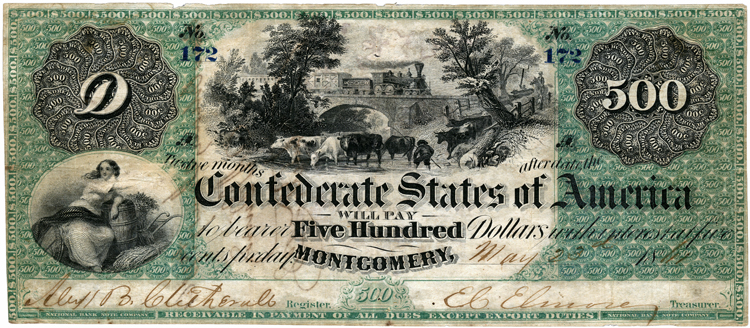
Figure 1. Image courtesy Wikimedia Commons (see reference bottom)
NBNCo is known to have reused The Crossing at least three more times in the next year or two:
- a $1 note of the North Western Bank (Warren, Pennsylvania, 1861, Figure 2.)
- a $5 note of the Exchange Bank of Attica (Indiana, '186-,' Figure 3.)
- a $5 note of the Clarksburg Branch of the Merchants & Mechanics Bank of Wheeling (Virginia, '186-,' Figure 4.)
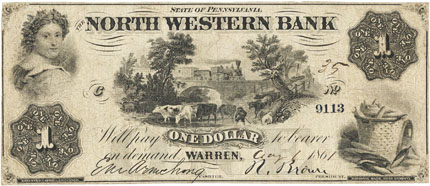 Figure 2. Image courtesy Heritage Auctions (see reference bottom)
|
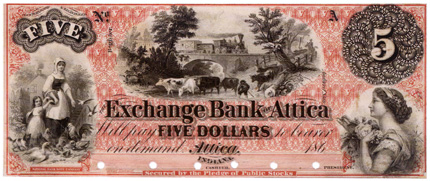 Figure 3. Image courtesy R. M. Smythe & Co (see reference bottom)
|
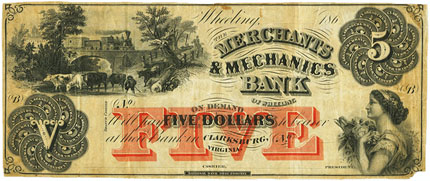 Figure 4. Image courtesy Heritage Auctions (see reference bottom)
|
Taxation enacted under The National Bank Act of 1863 (and later Internal Revenue Act of 1865) purposely removed private domestic and state bank currency from circulation. Consequently, NBNCo turned heavily to printing currency for countries outside the United States, especially in South America. It seems likely that NBNCo used The Crossing on bank notes of other countries, but the main domestic use appears to have been on stocks and bonds. The first verifiable depiction of The Crossing I have found on American documents is on a stock certificate of The Central Rail Road Company of Iowa, dated October 7, 1870.
That certificate is currently represented by a single surviving example, also printed by the National Bank Note Company. Although National had become part of the American Bank Note "Association" twelve years before, it continued to produce material under its own name until it consolidated, along with Continental Bank Note Company into American Bank Note Company (ABNCo), January 31, 1879.
It is obvious that The Crossing on the Central Rail Road stock certificate came from the same source die as the bank notes above. For the purposes of this article, I am calling that initial depiction Vignette 1. Later steel plate modifications of the vignette and all known lithograph imitations share these common characteristics:
- a train crosses a stone arch bridge left to right over a small creek
- a 4-4-0 locomotive with a funnel stack pulls the train
- the train consists of a baggage car and one visible passenger car
- a man on horseback herds seven cows down a trail toward a creek
- two fences define the trail leading from track level to the water
- a large fallen log bounds the trail on the right side
- a boy holding a cane pole wades in the creek with five cows
- a man holds a sign high overhead where the trail crosses the track
- two trees on either side of the creek lean inward to frame the scene
- ornamentation is visible on the side of the tender
- one passenger car is partly visible through the trees
Vignette 1 appears to be a fully completed work and generally measures about 3.54 inches wide (90 mm). The first question becomes ,"Who created this highly detailed vignette? And when?
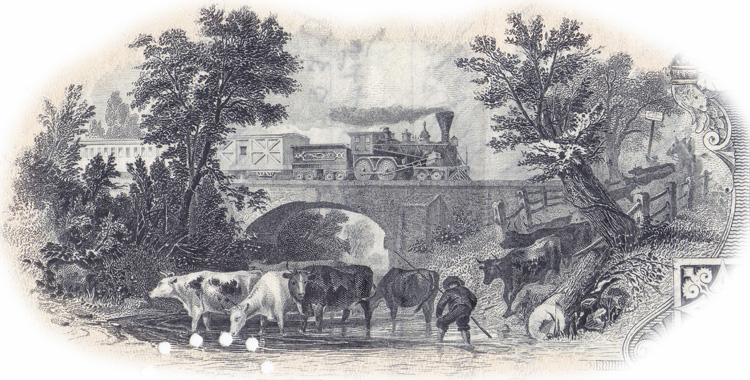
Figure 5. Vignette 1 (image courtesy Kevin Nesbitt.)
Slabaugh said without equivocation that the famous and prolific James Smillie engraved The Crossing. Gene Hessler later agreed, saying in The Engravers' Line that, "...engravers who have examined this engraving say it is the work of James Smillie."
To go a step further, Hessler found records at the American Bank Note Company that showed NBNCo had purchased an engraving from engraver Robert Hinshelwood in 1859 called The Crossing.
For clarification, NBNCo organized in November, 1859. After consolidation, NBNCo records and all its dies ended up at ABNCo, Since NBNCo acquired the engraving within a month of its formation, it is possible The Crossing vignette might have been used elsewhere in the year and a half prior to its appearance on the CSA $500 bill in May, 1861. Nothing has come to my attention so far.
In trying to unravel the origin of The Crossing, Hessler explained in The Engraver's Line that there had been a long-term relationship between Hinshelwood and James Smillie. Both were born in Edinburgh, Scotland and Hinshelwood had married Smillie's sister. Smillie emigrated to Canada in 1821 and later helped Hinshelwood move to the U.S. in about 1835. They later partnered in the short-lived engraving company "Smillie and Hinshelwood" in the mid-1840s. James Smillie joined NBNCo in 1861, at roughly the time the Confederate States of America contracted with NBNCo to produce its first currency. Was that when Smillie became involved with The Crossing, or was it earlier?
While The Crossing shows all the hallmarks of James Smillie's hand, questions remain about whether the die for Vignette 1 was a re-working or re-engraving of Hinshelwood's work, or was it an entirely different depiction. All three eventualities were common in the world of bank note engraving, so barring new discoveries, we probably will never know.
At present, I have recorded uses of the steel plate engraved Vignette 1 on stocks and bonds from six U.S. railroad companies.
|
Known uses of Vignette 1
|
| 1870 |
stock |
Central RR of Iowa |
| 1879 |
bond |
Texas Central Ry |
| 1881 |
bond |
Des Moines & Fort Dodge RR |
| 188- |
stock |
Milwaukee & Northern RR |
| 1896 |
stock |
New York Ontario & Western Ry |
A significantly wider version of The Crossing had appeared quite early on a Peruvian bond dated January 2, 1872. That was barely six months after its appearance on the CSA $500 bill.
I am arbitrarily calling that version Vignette 2. Personally, I think is too wide for use on the face of currency, but perfect for the bond. While all key elements of Vignette 1 remained , modifications were quite noticeable:
Vignette 2 included several new additions:
- two full passengers
- trees and bushes in front and beyond the train
- a man, dog, field, and fencing to the right
- five distant snow-covered peaks and two lower mountains
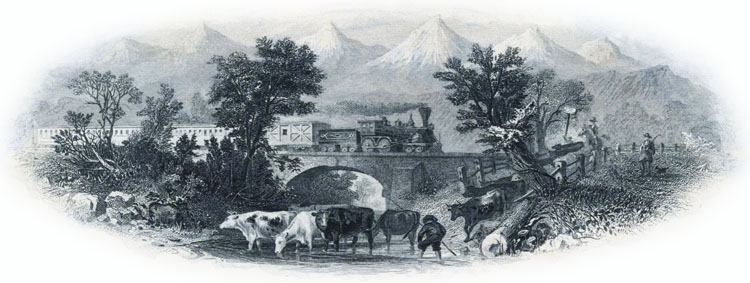
Figure 6. Vignette 2 (author's image.)
|
To my eye, the new cars, trees, rocks, man, dog, fence and field are the same general quality as in Vignette 1. However, I personal don't believe the engraved details of the distant mountains were depicted nor engraved to the level and quality typical of James Smillie.
Vignette 2 measures 5.13 inches wide (130 mm). If the vignette had appeared anywhere else, it would have needed to have been used on large documents like stocks and bonds or the backs of bank notes. The only occurrence known to me is on the 500 soles bond of La Compañia National del Ferrocarril Mineral de Pasco (The Pasco National Mineral Railroad Company) engraved and printed by NBNCo. (Figure 7.)
|
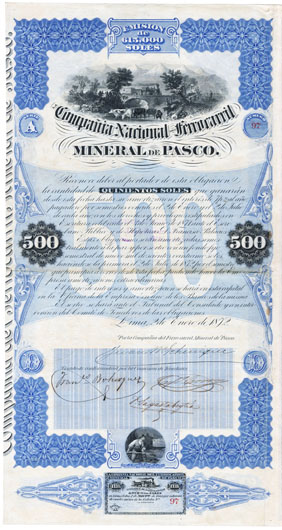 Figure 7. Peruvian railroad bond (Author's image.)
|
|
Vignettes 1, 2, and 3, include a classic Smillie tiny detail. Look carefully at the sign held by a man at the junction of the trail and railroad tracks. The sign is only 0.083 inches wide (2.1 mm), but engraved in microscopic letters is the warning, "Look Out For Bell Rings." The enlargement of the sign in Figure 7 was scanned from the Peruvian bond. Even when scanned at 12800 dpi, the lettering is still hard to decipher. The lettering on the sign in the three Crossing vignettes appears identical.
|
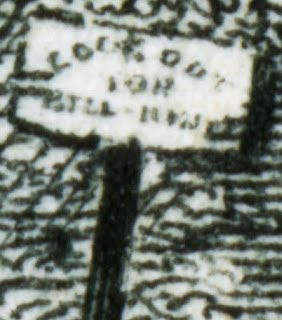 Figure 8. Detail of tiny sign.
|
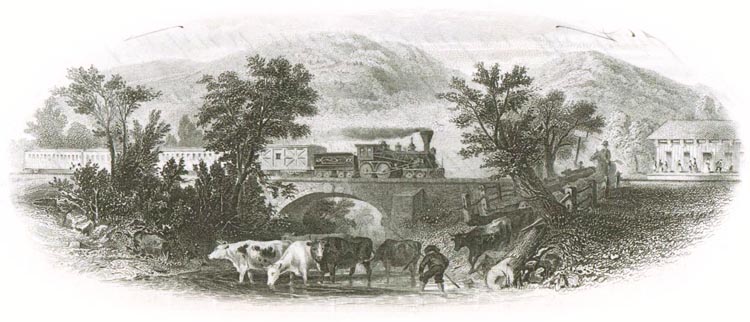
Figure 9. Vignette 3 (image courtesy Vern Alexander.)
NBNCo engraved and printed a third version of The Crossing. Vignette 3 shows all the common details and the quality of The Crossing original. At 4.88 inches wide (124 mm), Vignette 3 is wider than Vignette 1 and a bit narrower than Vignette 2. It retains all original details, but with these expansions:
- different trees at end of train
- different trees beyond the passenger cars
- fences removed from the field at right
- a rural station added beyond the open field
- seven people and a porter on the station platform
- tall Peruvian peaks replace by rounded mountains
Archives International Acution's first few auctions of specimens, proofs, and paper ephemera were handled by H.R. Harmer, Inc. Lot 1828 in the first massive offering (sale #2969) included sheets of NBNCo proof vignettes. One of the images for that lot showed Vignette 3 titled as Mountain Station.
While Vignettes 2 and 3 show similar modifications (passenger cars, trees, and rocks added to the left), they are not identical. In other words, the modifications were made separately and neither is a direct derivative of the other. The first appearance of Vignette 3 on currently known railroad securities was in 1879.
|
Known uses of Vignette 3
|
| 1879 |
bond |
Nevada Central Railway (Co) |
| 1881 |
bond |
Carolina Central Railroad Co |
| 1882 |
stock |
The Virginia Midland Railway Co |
| 1883 |
bond |
Carthage & Adirondack Railway Co |
| 1883 |
stock |
The Virginia Midland Railway Co |
| 1884 |
bond |
Milwaukee & Northern Railroad Co |
| 1887 |
stock |
Elizabethtown Lexington & Big Sandy Railroad Co |
NBNCo produced another highly vignette I am calling Vignette 4. It is similar to the original Vignette 1, but shows several key differences:
- the vignette is only 3.0 inches wide (76 mm)
- all of the cattle and people are gone
- the tree on the right is gone
- the locomotive has a diamond stack instead of a funnel stack
- there is a short waterfall in the creek.
The earliest confirmed use of Vignette 4 that I currently know about was as the central element of an 1872 Peruvian 1 sol bank note. NBNCo engraved and printed the note for El Banco de Tacna (Figure 10.) Vignette 4 was later used on certificates from at least four American railroad companies.
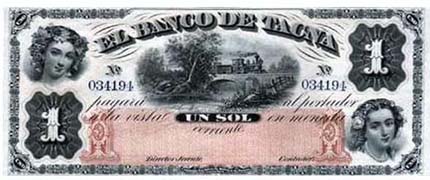
Figure 10, (Image courtesy Wikimedia Commons.)
Although the Vignette 4 train and bridge are nearly identical to The Crossing, other details seem a bit less exacting. Perhaps Vignette 4 is the work of a different engraver. Speaking strictly for myself, while obviously related to The Crossing, Vignette 4 (in Figure 11), is a different creation. Could this have been closer to Hinshelwood's 1859 engraving?
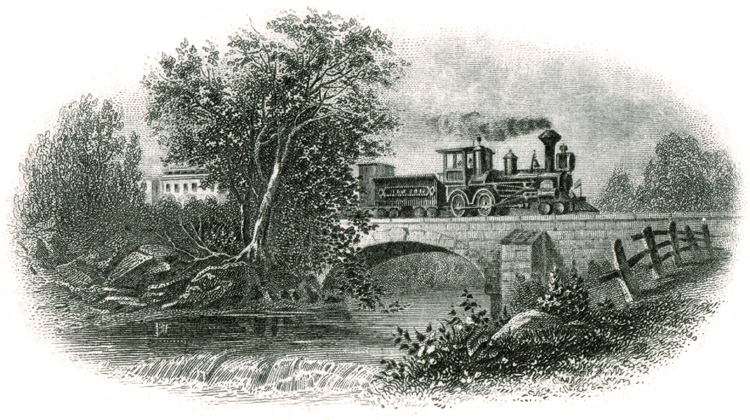
Figure 11. Vignette 4 (Author's image.)
|
Known uses of Vignette 4
|
| 1876 |
stock |
Michigan Midland & Canada Railroad Co |
| 1880 |
bond |
The Housatonic Rail Road Co |
| 1881 |
stock |
Flint & Pere Marquette Railroad Co |
| 1883 |
stock |
The Adirondack Railway Co |
Once The Crossing appeared on stocks and bonds, imitations followed almost immediately. All of the imitative versions I have cataloged show elements copied from Version 1. I know of no replicas of versions 2 and 3 on any railroad stocks and bonds cataloged to date. The quality of those look-alikes ranges from excellent to poor. Variations of The Crossing are plentiful, but it would nonetheless be a huge challenge for a collector to compile a complete collection of all examples. At present, I know of lithographed imitations of The Crossing on certificates from twenty-one rail-related companies:
|
Known lithograph imitations of The Crossing
|
| 1870 |
stock |
St Louis & Iron Mountain Rail Road Co Arkansas Branch |
| 1870 |
stock |
Cedar Rapids & Missouri River Rail Road Co |
| 1874 |
stock |
Baltimore & Drum Point Railroad Co |
| 1875 |
bond |
Illinois & St Louis Railroad & Coal Co |
| 1876 |
bond |
Henderson & Overton Branch Railway Co |
| 1877 |
stock |
Rock Island & Peoria Railway Co |
| 1878 |
bond |
Burlington & Lamoille Rail Road Co |
| 1880 |
stock |
Lexington & Southern Railway Co |
| 1880 |
stock |
Kansas City Leavenworth & Atchison Railway Co |
| 1880 |
stock |
Columbus & Maysville Railway Co Southern Division |
| 18-- |
stock |
The Solomon Valley Phillipsburg & Northern Railroad Co |
| n.d. |
stock |
Calvert Waco & Brazos Valley Railroad Co |
| 1884 |
stock |
The Springfield & Southern Railway Co |
| 1885 |
stock |
The Cleveland Indiana & St Louis Railroad Co |
| 1886 |
stock |
The Western Tie Co |
| 1886 |
bond |
Timber Hill Township Kansas (in aid of Kansas Nebraska & Dakota Railway Co) |
| 1887 |
stock |
Arkansas & Louisiana Railway Co |
| 1892 |
bond |
Chase County Kansas (in aid of Chicago Kansas & Western Railroad Co) |
| 1899 |
stock |
The Kansas & Southeastern Railroad Co |
| 1902 |
stock |
Rock Island & Mercer County Railroad Co |
| 1910 |
stock |
Idaho Northern Railway Co Ltd |
| 1916 |
stock |
Sussex Railroad Co |
References
37th Congress, Feb. 25, 1863, National Bank Act of 1863, (officially An Act to provide a national currency, secured by a pledge of United States stocks, and to provide for the circulation and redemption thereof,) Session III, Chapter 58.
38th Congress, Mar. 3, 1865, Internal Revenue Act of 1865 (officially An act to provide internal revenue to support the government, to pay interest on the public debt, and for other purposes,) Statutes at Large, Session II, Chapter 78, Sec 6.
Heritage Auctions, Dec. 7, 2010, Internet Currency Auction #31012, Lot 31199 (North Western note.)
Heritage Auctions, Sep 5, 2018, Long Beach Expo Currency Signature Auction #3567, Lot 22393 (Merchants & Mechanics note.)
Hessler, Gene: 1993, The Engraver's Line: an Encyclopedia of Paper Money and Postage Stamp Art. BNR Press.
H.T. Harmer, Inc., Jan 31, Feb1-2, 2007, American Bank Note Company Archives: Featuring Stock and Bond Certificates, Banknotes and Vignettes, Vignette Books, Production Material, Security Printing Ephemera & Fiscal Paper, Catalog 2969.
Slabaugh, Arlie R., Jan., 1991, "'The Crossing' vignette migrates through notes and securities" in The Bank Note Reporter.
R. M. Smythe & Co, Mar. 28-29, 2006, New York City Spring Auction 160, Lot 1544 (Attica note.)
Wikimedia Commons, user Godot13, Oct 4, 2014, photograph of $500 CSA note in possession of the National Numismatic Collection, National Museum of American History (Smithsonian Institution.)